The first days in May for the Bach Family


The first days in May for the Bach Family

The first few days in May had a  significance one for the Bach family. On 3 May 1694 Bach’s mother Maria Elisabeth ( née Lämmerhirt) was buried at Eisenach at the age of 50, her son Sebastian only nine years old.

In happier times nearly 30 years later, JSB signed his contract with the Leipzig Town Council on 5 May 1723. The music flowing from his pen in the succeeding years is a miracle of creativity isn’t it?
What is your favourite piece of music by Bach from his Leipzig years?

Email:  lbs@lonbachsoc.demon.co.uk

Share this:
Share this page via Email Share this page via Stumble Upon Share this page via Digg this Share this page via Facebook Share this page via Twitter

Royal Philharmonic Society Hon. Memberships

image001RPS Bicentenary continues with some inspired choices for Hon. Memberships

The RPS is marking its bicentenary year by awarding Honorary Memberships to five extraordinary music makers on four continents.

The recipients are:

►  Armand Diangienda, a former airline pilot who founded a symphony orchestra in one of the poorest cities on earth, Kinshasa, DR of the Congo

►  Dr Ahmad Sarmast, the founder of Afghanistan’s first national music school in Kabul

►  Rosemary Nalden, British viola player and founder of Buskaid, who persuaded distinguished musicians to busk at British railway stations to raise funds for a string project in South Africa, and now directs the thriving stringed instrument school in Diepkloof, Soweto.

►  Ricardo Castro, International pianist (and former winner of the Leeds Piano Competition) who established a flourishing youth music programme in Bahià, Brazil.

Aaron P. Dworkin, the founder of the Sphinx Organization, which gives opportunities and assistance to aspiring Black and Latino musicians in the USA. Sphinx’s mission is for classical music to embrace the diversity inherent in the society that it strives to serve.

London Bach Society readers will recall that Rosemary Nalden played viola for Steinitz Bach Players when working in the UK.

The awards will be made on 14 May at London’s Dorchester Hotel at the annual RPS Awards dinner and ceremony.

www. royalphilharmonicsociety.org.uk

Margaret Steinitz, LBS Artistic Director and RPS Member


Share this:
Share this page via Email Share this page via Stumble Upon Share this page via Digg this Share this page via Facebook Share this page via Twitter

Bach’s election as Cantor

22 April 1723 – Leipzig

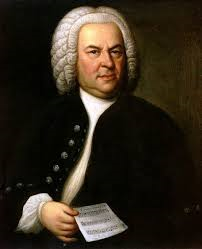
This most famous portrait of Bach was painetd when the composer was 61.

This most famous ‘second’ portrait of Bach (1748) is  by Elias Hauptmann. It is accepted as a copy of an original that was produced in 1746 when the composer was 61.

Bach was elected Cantor by the Leipzig Town Council at the age of 38. There were several more apparent ‘hoops’ for him to go through before he finally took office the following month.  This was the beginning of the most wondrous period of music composition to flow from his pen over the next few years…one wonders whether this would have happened had he NOT got the job!

Share this:
Share this page via Email Share this page via Stumble Upon Share this page via Digg this Share this page via Facebook Share this page via Twitter

Remembering our founder – Paul Steinitz 1909-1988


Dr. Paul Steinitz 1909-1988

Dr. Paul Steinitz 1909-1988

In remembrance of the founder of the London Bach Society, Steinitz Bach Players, Bach scholar and conductor, writer and teacher Dr. Paul Steinitz who died 25 years ago on 21 April 1988.


Share this:
Share this page via Email Share this page via Stumble Upon Share this page via Digg this Share this page via Facebook Share this page via Twitter

Peter Schreier awarded 2013 Leipzig Bach Medal

Peter Schreier, conductor, tenor and now Leipzig Bach Medal winner

Peter Schreier, conductor, tenor and now Leipzig Bach Medal winner

The Mayor of Leipzig to present the medal at June Bachfest

The Leipzig Bach Medal was established in 2003 and many distinguished interpreters of Bach’s music from around the globe have enjoyed the simple, dignified ceremony carried out during the annual Bachfest in the composer’s city.  The award itself celebrates its 10th anniversary this year and there is no more appropriate a recipient therefore  than the world-famous tenor and conductor, Peter Schreier.

Schreier is a native of Saxony and was born in Meissen in 1935. WWII was at its height and most of Dresden in rubble when he entered the famous Dresdner Kreuzchor as a chorister, a musical environment steeped in the rich tradition that defines the cultural heritage of this part of eastern Germany.  The young singer grew up surrounded by Bach’s music, the study and performance of which he was determined to pursue. Indeed for many Schreier became, and remains, the definitive  Evangelist in the Bach Passions. Following further study at the Dresden State Opera, Schreier rose quickly up the musical ladder and into the realms of international stardom. In addition to his Bach performances (Passions, cantatas and oratorios)  for which he was in much demand, he was equally pursued for Opera appearances and German Lieder recitals around the world. In later life Schreier also began to direct his own performances, especially of the Bach Passions. These were often impressively directed from memory,  every note part of him. His discs would fill many a Library shelf including some enjoyable recordings of Bach’s secular cantatas.

Peter Schreier’s intimate knowledge of the Bach repertoire and the deep insight he has brought to its interpretation is now being acknowledged by the composer’s city….thoroughly deserved.  Margaret Steinitz

Leipzig Bachfest • Theme »Vita Christi« • June 14–23, 2013

For full details about this year’s festival visit www.bach-leipzig.de and click on the Bachfest Leipzig tab.  A full programme in pdf can be downloaded and there are comprehensive details about how to obtains tickets, travel and accommodation.


Share this:
Share this page via Email Share this page via Stumble Upon Share this page via Digg this Share this page via Facebook Share this page via Twitter

The early St.Matthew in retrospect

The famous Tryptich on the Altar at the Thomaskirche is loaned by Leipzig University. It was originally at the Paulinerkirche, now demolished.

The famous Tryptich on the Altar at the Thomaskirche is loaned by Leipzig University. It was originally at the Paulinerkirche, now demolished.

A brief reflection on 12-15 March, Rehearsals and Performance

It was the UK ‘live’ première of this early version, something we were able to establish finally just before the performance, and what a week it turned out to be! A wonderful opportunity to think afresh about a work we think we know well. So first of all our thanks to everyone who supported us: Arts Council ‘Grants for the Arts’, our donors, the John S Cohen Charitable Trust, a Community Award from Deutsche Bank AG and our audience who attended and participated. The performance was part of a project ‘About the St. Matthew Passion’ and there are further events to come later in the year including the first performance of a New Work inspired by Bach’s St. Matthew.

The early St. Matthew

We had acquired the music weeks beforehand and our guest director Anthony Robson spent many an hour sifting through the orchestral parts, checking where the differences between this version and the more familiar 1736 score were, questioning some of the notes and ornaments and noting what details would need special attention in rehearsals. The basic structure of the piece is the same. However, not only were some whole movements different  (or variants as we called them), but we had to be alert to notational dfferences within each movement too. This is unlike what we find between the two earlier versions of the St. John Passion (1724 and 1725)  where Bach confined his revisions to the removal of whole movements and replaced them with  others, either specially composed or from an earlier cantata (e.g. the use of material from cantata BWV 23 Du wahrer Gott und Davids Sohn” of 1723 to close the 1725 version.)

Eight singers were hand-picked for the project; a combination of the experienced consort singer and soloist. A separate Evangelist and Christus was cast (see note below). The vocal scores were sent out in January to each singer, including Evangelist & Christus. In addition to the choral parts  and solos, the members of the consort assumed the character parts as well, forming  two choirs of four voices each.

A separate Evangelist and Christus

In Bach’s day, these central characters were sung by the tenor and bass in Choir I from the musicians’ gallery above, out of sight, and to the backs of the congregation seated below in the main body of the church. So it would not matter so much from where these roles were sung (from Choir I or as a separate soloist).  Nowadays, we perform to the audience seated in front of us. Therefore there  is more direct contact and an inherent need for people listening to focus more clearly on the central roles: the Evangelist as he relates the narrative and on Christ, the centre of the Passion. Would JSB have minded?  Hopefully not.

Charles Daniels replaced an indisposed James Gilchrist as the Evangelist and Peter Harvey sang the part  of Christ.

With the musicians having studied and prepared their obbligatos afresh in advance, there was a distinct air of expectation and anticipation right from the first rehearsal in Studio 2 at The Warehouse. This atmosphere  lasted all week. It was a sort of grandiose “spot the difference” experience that raised many a smile -  and many a query too. For example, addressing the latter meant avoiding the temptation to impose ornaments contained in the more familiar 1736 score on this early version  so that we would keep faith with what was in the parts before us,  accepting that what we played were Bach’s ‘first’ thoughts and, as time would eventually reveal, that the St. Matthew was actually still  ‘work in progress’.  Therefore some familiar ornaments were missing most notably  in the alto aria (No 39) “Erbarme dich…”.  During some arias or recitatives, the validity or accuracy of various notes was questioned. Were they Joh. Christoph Farlau’s mis-copyings?  The note(s)  don’t fit the harmony! How should we resolve this?   We also included the recorders in the tenor recitative with chorale (No 19) in Part 1 that featured later in the 1736 version. They have been otherwise omitted, with the parts given to the flutes (flauti), but we put this down to Farlau thinking contemporarily in the 1750s when making his copy – recorders had gone out of fashion by then, so he simply left them out. At least that is our assessment.

We were offered a very good slot on BBC Radio 3′s In Tune, so having discussed  what we wanted to do with Producer David Papp, all was agreed and off we went to Broadcasting House.  Now,  ‘live’ broadcasts are a challenge, but also the zenith of the art; Presenter Sean Rafferty created an easy atmosphere so as pros we just got on with the job!  Simon Wall (tenor), with our magnificent continuo team of Andrew Skidmore and Alastair Ross, performed the aria in Part 2  “Geduld, geduld…” in which Bach’s first ‘thoughts’ differ significantly in this version from those we are used to hearing. He and Alastair also performed the simple  chorale that closes Part 1 “Jesum laβ ich nicht von mir..”, another substantial difference (Simon singing the melody of this four-part hymn). There was no chorale fantasia ‘O Mensch bewein deine Sünde gross…” to close the first half, the movement we missed most of all.   Anthony Robson and I were interviewed setting our project in the context of the London Bach Society’s exploratory performances over 60 years. Then it was back to rehearsals…. and finally to a performance at St. John’s Smith Square that really took off.

We were thrilled that the large audience sang their chorales so readily (an LBS tradition started in 1952); that the attention was rapt for Dai Miller’s magnificent playing on his lute of what is more commonly known as the ‘gamba’ solo; that the absent ornaments and dubious notation were spotted; that the bass soloist began Part 2 instead of the alto; that the violin solos allocated to each Orchestra were reversed and so on…..

NB: All potential future performers:   No attempt was even contemplated to amend the 1736 score and parts we already owned to fit the early version. Any  performance of it should be approached as a ‘clean sheet’  from the beginning, a new start.

Promoting ‘early’ versions of familiar and beloved  masterpieces like Bach’s  St. Matthew Passion are a risk. People like what they know and know what they like!  But this was a risk well worth taking. We now know a lot more about the genesis of the St. Matthew….and so do you!

My thanks to everyone concerned.

Margaret Steinitz Artistic Director, LBS

Consort of Voices

Grace Davison, Alexandra Gibson, Jeremy Budd, Ben Davies;  Julie Cooper, Ruth Massey, Simon Wall, Eamonn Dougan

Steinitz Bach Players

Continuo: Andrew Skidmore, Andrew Durban, Alastair Ross

Orchestra I: Catherine Martin, Oliver Webber, Jan Schlapp, David Miller, Rachel Beckett, Christine Garratt (Flutes), James Eastaway, Catherine Latham (Oboes)

Orchestra II: Alison Bury, Jean Paterson, Annette Isserlis, Helen Verney Georgia Browne, Eva Caballero (Flutes), Cherry Forbes, Ruth Theobald (Oboes)

Orchestra & Concerts Manager: Philippa Brownsword


Share this:
Share this page via Email Share this page via Stumble Upon Share this page via Digg this Share this page via Facebook Share this page via Twitter

The Art of Fugue BWV 1080 or “The Art of Bach”

Bach’s  Art of Fugue

One of the regretably few performances of Bach’s music to be featured in the BBC Proms this year is one of his most fascinating – his Art of Fugue BWV 1080. Perhaps a better and more appealing title for this collection of fugues (each called Contrapunctus) and  canons could be The Art of Bach. The content suggests  that the instrument should be a keyboard (harpsichord or organ) with the work  either intended for performance and/or study, although Bach did not specify.

With the flow of cantatas, passions, oratorios, instrumental works et al of the 1720s enough to occupy several lifetimes of study and performance,  the events in the final decade of Bach’s life (1740s) could easily be overshadowed in our thinking and listening. Unwise move…it was a highly productive period and one where we see the composer perhaps putting his music in order, arranging it for posterity even,  and for publication.  The Musical Offering, Canonic Variations and  the ubiquitous Mass in B minor for example all date from the 1740s..and so does the Art of Fugue.

Published posthumously in 1751  Die Kunst der Fuge,  to give it the German title,  was unfinished at Bach’s death in 1750. It didn’t sell very well either and successive performances have tended to be  instrumental arrangements, rather than solo renditions. It had been surmised ere long that the work  dated from Bach’s  last few years, say post 1747, but now it has been established that most of it was completed by 1742 – which also happens to be Bach’s last year as  Director Musices Leipzig Collegium Musicum. Therefore  it is not surprising that Mahan Esfahani ‘s arrangement of the Art of Fugue for instruments will be performed at the BBC Proms in the ‘informal spirit’ of the Collegium’s'  concerts…..but, be in no doubt, these weekly concerts  were serious affairs to which Bach devoted a considerable amount of time preparing the programmes.

The Leipzig Collegium Musicum is the students musical society founded by Telemann in 1702 whose significance in Bach’s life gains evermore fascination for scholars and performers today.  Bach and the students   met on  Friday evenings in  Zimmermann’s Coffee House on Leipzig’s fashionable Katharinenstrasse  in winter and in his garden on the outskirts of the city in summer. The concert evenings were a ‘cool’ place to be, with musicians visiting the city keen to take part. They were also important signposts for the musical life at Leipzig that burst forth in the 19th century and remains today.

The harpsichordist Mahan Esfahani is a former BBC New Generation Artist and one of the exciting musicians emerging on the international scene today. He will present his arrangement of the Art of Fugue with  the Academy of Ancient Music at a sold out performance at London’s  Cadogan Hall on Saturday 21 July. The performances will be relayed on BBC Radio 3 from 3.00pm.

www.bbc.co.uk/proms

Share this:
Share this page via Email Share this page via Stumble Upon Share this page via Digg this Share this page via Facebook Share this page via Twitter

Lina Lalandi OBE Founder English Bach Festival

Lina Lalandi OBE (d. 8 June 2012)

Lina Lalandi photo by Clive Barda

Lina Lalandi, the founder of the English Bach Festival, died last month. She was in her early nineties and one of the most colourful figures on the  Festival scene during her lifetime.  Her vision and flair, backed up by sheer nerve,  made her a formidable character to deal with, yet her achievements were considerable and far outweigh the feelings of consummate exasperation if working for and with her. Mystique was also something she cultivated. A woman’s age was her own business!  Stories of her numerous exploits in the Festival’s cause often took precedence over the actual facts of the matter,  punctuated at many a rehearsal coffee-break by gales of laughter especially during the Festival period (April/May).

Madeleine (Lina) Lalandi was born in Athens in 1920. She graduated from Athens Conservatoire and then pursued a career as a harpsichordist, studying privately in Britain where she later made her home.  Her interest in the music of Bach and prominent French Baroque keyboard composers led her to found the English Bach Festival in 1962, establishing it as an annual series presented in Oxford and London.

From the beginning, Lina’s  natural flair and her pursuasive powers lured many prominent musicians into her orbit. Dr. Albert Schweitzer was the first President  succeeded by none other than Igor Stravinsky and then by Leonard Bernstein.  Her success  is also due in no small measure to those who advised and helped her.   Co-Artistic Director Sir Jack Westrup (d.1975) and LBS founder-conductor Dr. Paul Steinitz (d.1988) were among those she consulted on musical matters. Indeed it was Dr. Steinitz who contributed the opening article in the first Festival programme Book published in 1963. The article was  entitled ” Notes on the history of the German Cantata”.  Lina’s husband Ralph Emery was a considerably generous benefactor and long-serving secretary John Bertaut worked tirelessly on behalf of the Trust.

The EBF’s  ‘golden decades‘ were perhaps the 1960s and 70s. Here Gönnenwein, Rilling, Richter and other German Bach specialists of the day featured and these were rare opportunities to experience live performances given by them as opposed to those captured on the raft of German Bach recordings available at the time.   With the full emergence of period instruments on the scene in the 1970s, Lina Lalandi did not let the grass grow either….she invited Leonhardt and his Musica Antiqua Amsterdam and Harnoncourt’s Concentus Musicus Vienna to the EBF to packed audiences on London’s South Bank.  Paul Steinitz, London Bach Society choir and Steinitz Bach Players were annual participants too, with invitations one particular year to present cantatas in Oxford on the Wednesday, then back there on the Saturday for a St. Matthew Passion, repeated the next day in the Royal Albert Hall!

From the late 1970s and into the 1980s,  Lina’s attention turned more and more to baroque opera and dance, the perfect vehicles  to indulge her extravagant tastes that must have given the treasurers nightmares.  She formed her own ensembles for the purpose, with the fruits of her researches into baroque costume, gestures and dance forms bringing us the beautiful Divertissements in London’s Banqueting House or  rarely-staged Rameau Operas at the Royal Opera House. These productions were then often taken to Paris, Madrid or Athens.

Elsewhere others will write of Lina’s work championing contemporary composers, especially her fellow countrymen Xenakis and Skalkottas, and will share their own memories of an extraordinary character – there will be plenty of them.

Lina Lalandi received many decorations during her lifetime – from France, Greece and an OBE in 1975. MS

(Updated on 12 July 2012)

Share this:
Share this page via Email Share this page via Stumble Upon Share this page via Digg this Share this page via Facebook Share this page via Twitter

2012 Leipzig Bach Medal

Masaaki Suzuki photo by Marco Borggreve

Masaaki Suzuki awarded the Leipzig Bach Medal 2012

The 2012 Leipzig Bach Medal was awarded to the Japanese conductor and harpsichordist Masaaki Suzuki on 8 June at a concert given by the Bach Collegium Japan as part of the 2012 Leipzig Bachfest.  BCJ’s founder-conductor, Professor Suzuki is a major contributor to Bach scholarship and performance and another whose name, by the end of this year, will be added to the growing list of distinguished conductors who have performed all the extant church cantatas of Bach. 


Share this:
Share this page via Email Share this page via Stumble Upon Share this page via Digg this Share this page via Facebook Share this page via Twitter

Nikolaus Harnoncourt awarded RPS Medal

Nikolaus Harnoncourt is awarded RPS Medal

The distinguished Austrian conductor Nikolaus Harnoncourt was  given one of the world’s most prestigious awards – The Gold Medal of the Royal Philharmonic Society.

On Sunday 22 April 2012 at 3.00pm in London’s Barbican Centre, Harnoncourt joined a roll of honour without parallel in the history of world music. Inaugurated to mark Beethoven’s centenary, previous recipients include composers Brahms, Delius and Elgar, Stravinsky and Benjamin Britten,   singers Kathleen Ferrier, Dame Janet Baker and Thomas Quasthoff, and conductors Sir Charles Mackerras and Sir Simon Rattle.

Recognised for his outstanding musical achievements on the world’s stage, Nikolaus Harnoncourt is also one of the earliest pioneers of Bach played on period instruments and according to period style. With his Concentus Musicus Vienna, he shared with the harpsichordist and director Gustav Leonhardt/Musica Antiqua Amsterdam what is probably the most important and influential complete cycle of Bach’s church cantatas on disc – the series they recorded for Teldec from 1970-the early 1990s.  Why was this series important? Because it enabled a wider audience to experience the new sound world of period style playing on original instruments, all-male solo and choral forces, and to hear the composer’s church cantatas (the cornerstone of his output) complete using musical forces with which Bach himself would have been familiar. A kindred spirit, the London Bach Society sends warmest congratulations to Nikolaus Harnoncourt on this very auspicious occasion.

The Royal Philharmonic Society celebrates its bi-centenary in 2013.

Share this:
Share this page via Email Share this page via Stumble Upon Share this page via Digg this Share this page via Facebook Share this page via Twitter